
Forget quick fixes. Here's how to lose weight and keep it off for good with sustainable, evidence-based strategies.
The weight loss industry generates over $70 billion annually in the United States alone — a figure that reveals both the enormous demand for solutions and the persistent failure of most marketed approaches to provide lasting results. Research published in the American Psychologist found that approximately two-thirds of dieters regain more weight than they lost within four to five years of dieting, and that repeated weight cycling may be more harmful to long-term health than remaining at a stable elevated weight. This pattern suggests that the problem is not personal willpower but rather the fundamentally unsustainable nature of most weight loss programs. Genuine, lasting weight management requires a fundamentally different approach: gradual, sustainable lifestyle changes that modify behavior, metabolism, and environment simultaneously.
A modest and consistent caloric deficit — rather than dramatic restriction — is the most evidence-based approach to long-term weight loss. A deficit of 500 calories per day theoretically produces approximately one pound of weight loss per week, though metabolic adaptation means real-world results are often somewhat less. Research comparing aggressive caloric restriction (800–1,000 calorie/day deficits) with modest restriction (500 calorie/day deficits) consistently finds that the modest approach preserves more lean muscle mass, produces less pronounced metabolic adaptation, and results in better weight maintenance at one to two years. Rather than cutting calories dramatically, focus on reducing 200 to 500 calories per day through a combination of reducing energy-dense processed foods and increasing physical activity.
Scan Any Food. Track Instantly.
No more manual searching or guessing nutritional values. Point your camera at any barcode and get full macro and micro data in under a second — calories, protein, carbs, fat, fibre, sugar, and salt. Every scan auto-logs to your daily food journal, keeping you effortlessly on track.
Products in database. Powered by Open Food Facts — the world's largest open food database. If it has a barcode, we've got it.
Free to use · No credit card required

Behavior-focused goals consistently outperform weight-focused goals for long-term success. Research in the journal Obesity Reviews found that people who set specific behavioral targets — 'I will prepare my lunches for the week on Sunday' or 'I will walk for 30 minutes after dinner on weekdays' — lost more weight and maintained it longer than people whose goals were weight-based ('I want to lose 20 pounds'). Behavioral goals create actionable, controllable targets; weight goals depend on biological processes that vary day-to-day due to water retention, hormonal fluctuation, and glycogen stores. Focus on the behaviors that lead to weight loss and allow the weight to follow.
"Two-thirds of dieters regain more weight than they lost within four to five years — the problem is not willpower but the fundamentally unsustainable nature of most programs."
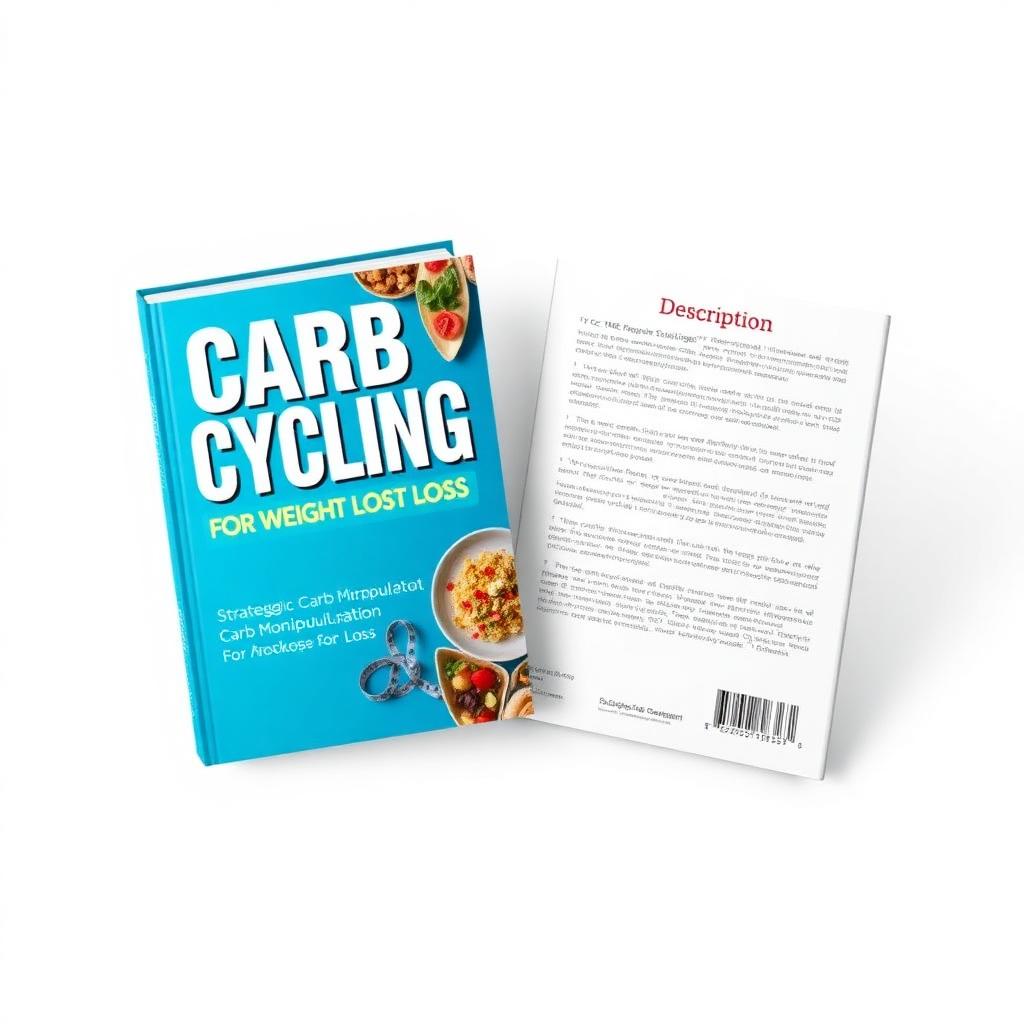
Carb Cycling for Weight Loss
Strategic carb manipulation for fat loss while maintaining muscle mass.
Protein is the most important macronutrient for sustainable weight loss through several complementary mechanisms. First, protein is the most satiating macronutrient — it stimulates greater release of satiety hormones (GLP-1, PYY, CCK) than equivalent calories from carbohydrates or fat. A randomized controlled trial published in the American Journal of Clinical Nutrition found that increasing protein from 15 to 30 percent of calories spontaneously reduced caloric intake by 441 calories per day without deliberate restriction. Second, protein preserves muscle mass during caloric deficit — without adequate protein, approximately 25 to 30 percent of weight lost on a caloric restriction diet comes from muscle tissue rather than fat. Third, protein has the highest thermic effect of food (25–30% of its calories are burned during digestion), making it more metabolically expensive than carbohydrates or fat.
Resistance training during weight loss is not optional — it is essential for preserving the muscle mass that determines your resting metabolic rate and long-term weight maintenance success. A clinical trial published in Obesity found that participants who combined resistance training with caloric restriction lost the same amount of total weight as those who did cardio with restriction, but retained significantly more muscle mass and had better metabolic outcomes at one year. Each pound of muscle burns approximately 6 to 10 calories per day at rest. Losing 10 pounds of muscle during dieting (a common consequence of cardio-only, high-restriction approaches) reduces resting metabolic rate by 60 to 100 calories per day — a metabolic handicap that makes maintaining weight loss progressively more difficult.
"A deficit of just 500 calories per day produces lasting results while preserving muscle mass and avoiding the metabolic slowdown caused by aggressive restriction."
We Don't Just Tell You What to Do.
We Tell You Why You Failed Before.
Most people treat health like a math problem — but it's a behavioural problem. Our combined psychology assessment identifies the patterns sabotaging both your diet and fitness progress, then builds one unified plan that works with your real personality.
More likely to succeed. Programs incorporating CBT result in significantly better long-term weight maintenance.
Diet + Fitness combined · Completely free · ~4 minutes

8 diet profiles + 8 fitness profiles — which combination are you?
Sleep quality and quantity are underestimated determinants of weight loss success. Research from the University of Chicago found that restricting sleep from 8.5 to 5.5 hours per night eliminated 55 percent of fat loss during a caloric restriction period — the sleep-deprived participants lost the same total weight but predominantly from muscle rather than fat. Sleep deprivation disrupts leptin (satiety hormone) and ghrelin (hunger hormone) balance, increasing appetite by an average of 24 percent the following day. It also dramatically increases cravings for calorie-dense, high-sugar foods by amplifying activity in the endocannabinoid system. Prioritizing 7 to 9 hours of quality sleep per night is a genuine weight management intervention, not a luxury.
Weight loss is inherently non-linear, and understanding this prevents the demoralization that causes most people to abandon sustainable approaches. Body weight fluctuates by 2 to 5 pounds daily due to water retention from carbohydrate intake, hormonal fluctuations (particularly in women across the menstrual cycle), sodium intake, stress hormones, and bowel contents. Tracking weekly average weight rather than daily weigh-ins provides a more accurate picture of actual fat loss trend. True weight loss plateaus — where fat loss has genuinely stalled despite a caloric deficit — are often best addressed by a one to two week 'diet break' at maintenance calories, which research shows can reduce metabolic adaptation and improve subsequent fat loss rates.
Dr. Lisa Park
Obesity Medicine Specialist
Expert contributor at our health & wellness platform, bringing evidence-based insights to help you achieve your nutrition and fitness goals.