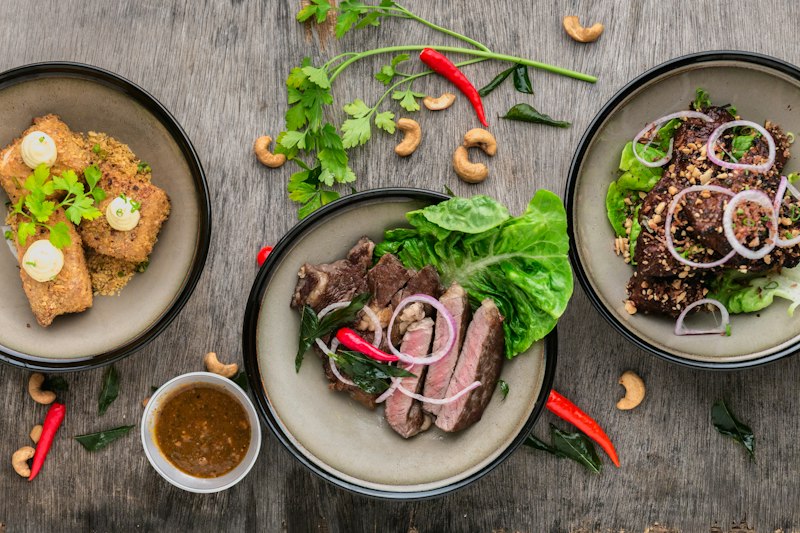
Pre-portioned meals eliminate guesswork and overeating. Here's the weight-loss meal prep system that actually works.
Weight loss is fundamentally a problem of consistent caloric deficit over time — consuming fewer calories than the body expends, consistently enough and long enough to reduce body fat stores. Meal prep solves the core execution problems that prevent consistent caloric deficit: decision fatigue (which drives impulsive, higher-calorie choices), portion distortion (underestimating the caloric content of self-served portions), and environmental availability (choosing takeout because healthy food isn't immediately available).
Research consistently demonstrates that pre-planned, pre-portioned eating produces significantly better weight loss outcomes than relying on willpower and in-the-moment decision-making. A 2008 study in the American Journal of Preventive Medicine found that people who tracked and pre-planned their food intake lost twice as much weight as those who didn't — a finding replicated across dozens of subsequent studies.
## The Calorie-Controlled Container System
"Pre-portioned meals are the most effective weight loss tool available — they eliminate the two biggest drivers of overeating: decision fatigue and visual distortion of appropriate portion size."
Carb Cycling for Weight Loss
Strategic carb manipulation for fat loss while maintaining muscle mass.
Predict How Food Affects Your Body
Before You Eat.
Log glucose readings, energy levels, and sleep quality to build your personal metabolic fingerprint. Our platform then predicts the glucose spike, energy impact, and metabolic score of any meal before you eat it — and suggests real-time tweaks like 'add avocado to blunt the glucose spike' right on the meal card.
Smarter than calorie counting. Two meals with identical calories can have wildly different effects on your energy, cravings, and fat storage. Metabolic Intelligence reveals the difference.
Free to use · No credit card required

The most practical weight-loss meal prep approach is the container method: assign caloric targets to specific container sizes and fill them according to a defined proportion. A standard weight-loss container allocation for a 1,500-calorie daily target might be: Breakfast container (400 calories) — protein + complex carbohydrate + fruit; Lunch container (450 calories) — protein + vegetables + grain; Snack container (150 calories) — protein + fruit or vegetable; Dinner container (500 calories) — protein + large portion of vegetables + modest grain.
The critical insight is that pre-portioning into containers removes the in-the-moment serving decision — the single most error-prone moment in any dietary approach. When food is pre-portioned, the only decision is which container to eat, not how much to take. This shift from execution to selection dramatically reduces caloric variance and improves adherence.
"Research consistently shows that people who track food intake or use pre-portioned meal prep lose 2–3 times more weight than those who rely on intuitive eating without any structure."
## High-Volume, Low-Calorie Strategies
The most sustainable approach to weight-loss meal prep is not eating small amounts of food — it's engineering meals that provide large food volumes for modest caloric cost, maximizing satiety per calorie. Vegetables are the foundation of this approach: 200 grams of roasted broccoli provides 70 calories and 3 hours of satiety. 200 grams of cooked chicken provides 300 calories and extraordinary satiety from protein. Together, a 500g meal of roasted broccoli, capsicum, and zucchini with 200g chicken provides 370 calories — comparable to a small snack in caloric terms but enormously satisfying in volume and satiety.
Specific high-volume strategies: replace half the grain in bowls with cauliflower rice (saves 100 to 150 calories per serving while increasing fiber and volume); use a bed of leafy greens under grain bowls (adds volume and micronutrients at near-zero caloric cost); prioritize fiber-rich vegetables (broccoli, Brussels sprouts, cabbage, kale, spinach, artichokes) that slow gastric emptying and extend satiety; use Greek yogurt in place of cream, sour cream, and mayo (saves 50 to 150 calories per tablespoon while adding protein).
"High-volume, lower-calorie meal prep — large amounts of food with relatively few calories — is the key to weight loss without hunger. Vegetables are the foundation of this approach."
## Protein-Forward Recipes Under 400 Calories
🧠 You're not hungry, you're bored. Try a 2-min walk.
✅ 340 kcal under target — on track!
🌅 Skipping breakfast causes 3pm crashes. Fuel up!
🍫 Craving chocolate? That's low magnesium. Try almonds.
😤 Stressed? Don't eat — breathe 4-7-8 for 60 seconds.
We Put Your Journey on Autopilot.
Once assessed, our optional notifications act as "Just-in-Time Adaptive Interventions" (JITAI) — a digital therapist in your pocket. Behavioural scientists say lasting change happens when Motivation, Ability, and a Prompt converge at the same moment. Our coach delivers exactly that, learning from your logged meals, moods, and habits to become more accurate over time. Instead of generic reminders, Marcus sends context-aware nudges grounded in CBT — challenging the specific thought patterns that derail your progress, right when they're most likely to strike.
Your Coach Never Sleeps.
Marcus sends intelligent CBT-based push notifications that rewire your decisions in real time — challenging cognitive distortions before the damage is done.
These four recipes demonstrate high satiety, low calorie meal prep: Lemony Chicken and Vegetable Bowl (150g grilled chicken breast, 200g roasted zucchini and bell pepper, 80g quinoa, lemon herb dressing) — 380 calories, 42g protein. Spiced Turkey Lettuce Cup Bowl (130g ground turkey, butter lettuce wraps, shredded cabbage, avocado crema) — 340 calories, 36g protein. Salmon and Asparagus Power Plate (130g baked salmon, 250g steamed asparagus, 80g brown rice, lemon) — 395 calories, 35g protein. Egg White and Vegetable Frittata (8 egg whites, 1 whole egg, mushrooms, spinach, tomatoes) — 220 calories, 28g protein.
## Snack Prep for Craving Management
"The goal is not to eat as little as possible — it is to eat as much high-quality, nutrient-dense, satisfying food as your caloric target allows. Deprivation-based approaches always fail long-term."
Pre-portioned snacks prevent the uncontrolled between-meal eating that accounts for a significant proportion of overconsumption. Prep these snacks in individual containers at the beginning of the week: 150g non-fat Greek yogurt with 50g berries (100 calories, 15g protein); 1 medium apple with 1 tablespoon almond butter (185 calories, 4g protein); 30g hummus with raw vegetable sticks (90 calories, 4g protein); 1 hard-boiled egg with cucumber slices (80 calories, 6g protein). Having appropriate snacks immediately available eliminates the circumstances that trigger impulsive eating decisions.
Rachel Kim
Food Prep Blogger
Expert contributor at our health & wellness platform, bringing evidence-based insights to help you achieve your nutrition and fitness goals.